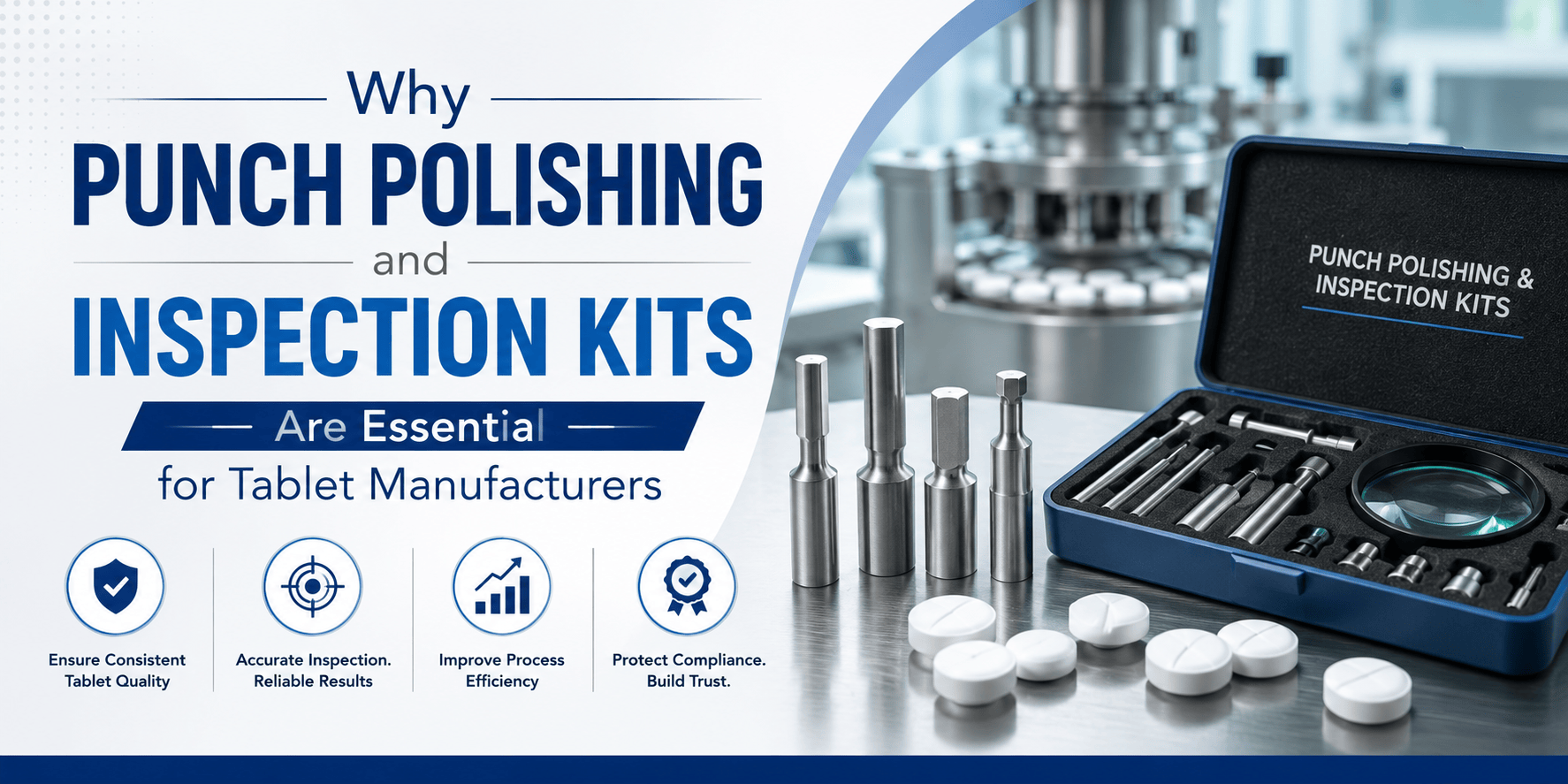


In pharmaceutical manufacturing, tablet quality is judged long after production begins — sometimes only when defects start appearing on the line or during stability studies. By then, correction becomes expensive.
In reality, tablet quality is determined much earlier, at the point where formulation, compression force, and tooling precision meet. At the centre of this interaction is the tablet punching machine.
A tablet punching machine is not just a machine that makes tablets. It is a controlled compression system where tablet weight, hardness, appearance, and performance over time can all be affected by slight variations, even by microns, in punches, dies, or alignment.
This document outlines the operation of tablet punching machines in the pharmaceutical industry, the various types available, and the importance of the quality of tablet dies and punches as well as tablet press tooling in producing tablets with the same quality and the same standards. The objective is to be as practical as possible and to concentrate on the real challenges that are encountered on the shop floor.
What Is a Tablet Punching Machine?
A tablet punching machine is a type of pharmaceutical compression machine that turns powder or granules into tablets of the same size, weight, hardness, and shape by applying the same amount of pressure with the same punches and dies.
In solid dosage production, the tablet punching machine performs four important functions to make sure the quality is in check.
- Controls the weight of each tablet by the depth of each fill
- Set the desired hardness by the compression force
- Set the desired tablet shape and design through the tooling
- Set the desired quality by repeatable motion
Unlike mixing or granulation, in compression, all the processes are mechanical. This means that the tool alignment and the tool surface finish have a direct and immediate effect on the end quality of the tablets.
For this reason, manufacturers increasingly evaluate the tablet punching machine for pharmaceutical production not only by speed but also by its ability to maintain precision over long production runs.
How Does a Tablet Punching Machine Work?
The working principle of a tablet punching machine follows a fixed compression cycle. Understanding this cycle helps identify where most tablet defects originate.
Stage of Powder Filling
Granules or powder are introduced into the die cavity using the feeder system. The position of the lower punch determines the fill depth and, therefore, the tablet weight.
During filling, there is the possibility of uneven filling, particularly when the dies are worn or there is inconsistent powder flow, leading to weighing issues prior to compression.
Stage of Pre-Compression
Even out air gaps. Most modern compression tablet machines possess a pre-compression stage. During this stage, a light pre-compression force is applied to the powder bed.
This is done to facilitate:
- Less lamination
- Greater tablet density
- Control main compression force
Poor pre-compression can create defects which are hidden until later.
Main Compression Stage
During main compression, the upper punch applies a force which is controlled against the lower punch. This stage determines:
- The mechanical strength
- The hardness
- The thickness
Altering the punch tip geometry, die wall finish, and punch alignment is important. Even minor punch wear can significantly change compressibility.
Tablet Ejection Stage
After compression, the upper punch retracts and the lower punch rises to eject the tablet from the die. Smooth ejection depends on proper polishing and correct punch-to-die clearance.
Sticking, picking, and edge damage usually originate here.
Types of Tablet Punching Machines Used in Pharma
Depending on factors like output, formulation, and tooling compatibility, tablet punching machines are used by pharmaceutical manufacturers.
Single Rotary Tablet Punching Machine
Common uses of single rotary machines include:
- Small batch production
- R&D and formulation development
- Clinical trial batches
While they offer good control and increased flexibility, they provide limited output. There is less tooling wear, but consistency is ensured by precision.
Double Rotary Tablet Punching Machine
Double rotary tablet punching machines, with their ability to increase output by having two compression stations, are a favourite in medium- to high-volume pharmaceutical manufacturing.
At this scale:
- Tooling consistency is of the utmost importance
- Punch alignment is critical
- Tool wear is a big factor in rejection rates
High-Speed Tablet Punching Machines
Designed for high-volume production, high-speed tablet punching machines can produce hundreds of thousands of tablets a day.
At this high rate of production:
- Wear on the punches and dies increases
- More heat is generated
- Surface finish quality is crucial
If the tools used are of a high standard, high-speed machines will produce tablets consistently. Otherwise, the machines will frequently stop..
Role of Tablet Dies and Punches in Tablet Quality
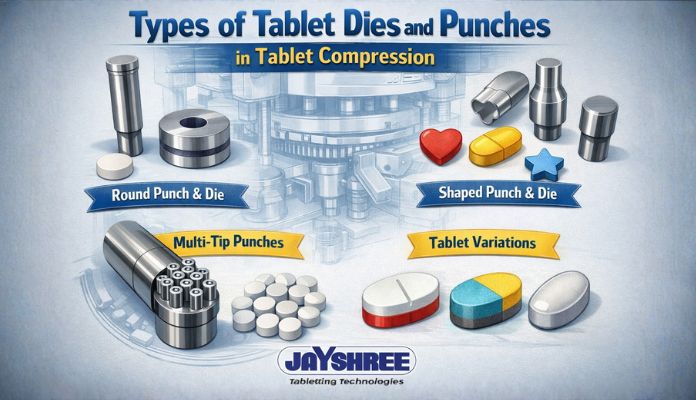
The most important parts of a tablet punching machine, and indeed any tablet punching machine, are tablet dies and punches. They determine tablet geometry and apply the compression force to the formulation.
High-quality tablet dies and punches ensure:
- Consistent tablet weight
- Tablet hardness consistency
- Tablet surface quality
- Tablet surface smoothness
Poor-quality tooling, on the other hand, often causes:
- Weight variability due to die wear
- Poor tablet surface finish leading to sticking and picking
- Incorrect geometry leading to chipping, capping, and poor punch geometry
- Reduced tool life leading to the need for frequent replacements.
It is common for tablet formulation problems to be caused by poor, imprecise tooling. High-precision punches and dies eradicate these problems from the source.
Tablet Press Tooling: Why Precision Matters More Than Speed
In pharmaceutical manufacturing, speed increases stress — not quality.
Tablet press tooling must withstand:
- High compression forces
- Continuous friction
- Cycles of repeated impacts
Precision tooling is defined by:
- The right steel grade for the tool
- Micron-precision
- Superior quality polishing
- Tight die and punch spacing
Well-designed tablet press tooling minimises friction, enhancing tablet release and overall functionality throughout long and intensive production cycles.
While poor tablet tooling may seem cost-saving, in the long run, it will increase rejection rates, production downtime, and overall cost.
How to Choose the Right Tablet Punching Machine and Tooling
Using both a tablet punching machine and its tooling system effectively requires fully understanding both components.
Key selection factors include:
- Formulation characteristics: If formulations are too abrasive or too sticky, this will result in further refinishing.
- Production volume: Greater amounts of output will result in a greater need for stronger and more wear-resistant tooling.
- Compression force requirements: Applications in which greater force is used will require a more robust punch design.
- Tooling standards: Accessories will be more easily sourced and interchangeable depending on whether they are compliant with EU or TSM standards.
- Maintenance strategy: Tool life will have a direct effect on operational efficiency.
Manufacturers who own these resources early in machine selection tend to be able to circumvent expensive rectifications down the line.
Common Tablet Defects Caused by Poor Tooling
Many tablet defects are associated with tool design and quality.
Common problems include:
- Poor compression geometry leading to the phenomena of capping and lamination
- Variations in die dimensions increased the likelihood of weight variation
- Varying degrees of punch wear producing hardness variation
- Poorly designed polishing leading to increased rates of sticking and picking
- Improperly selected steel leading to increased rates of punch breakage
- All of these design flaws impact production quality and quantity.
Why Tooling Quality Determines Long-Term Press Performance
A tablet punching machine can never rectify poor tooling.
Quality tools mean:
- Stable compression behavior
- Less downtime
- Predictable tablet quality
- Lower total cost of ownership
With over 35 years of experience, Jayshree Tablet Science specialises in the design of tablet dies, punches and press tooling designed for precision engineering for the pharmaceutical industry.
Conclusion
Tablet quality is built into the compression system, not corrected at the press.
A good tablet punching machine, precision tablet dies and punches, and quality tablet press tooling will give you consistent output, fewer defects, and dependable production.
Looking to improve tablet quality, tooling life, and compression consistency?
Explore precision-engineered tablet punching machines and tooling solutions by Jayshree Tablet Science — built for pharmaceutical manufacturing where precision matters.