

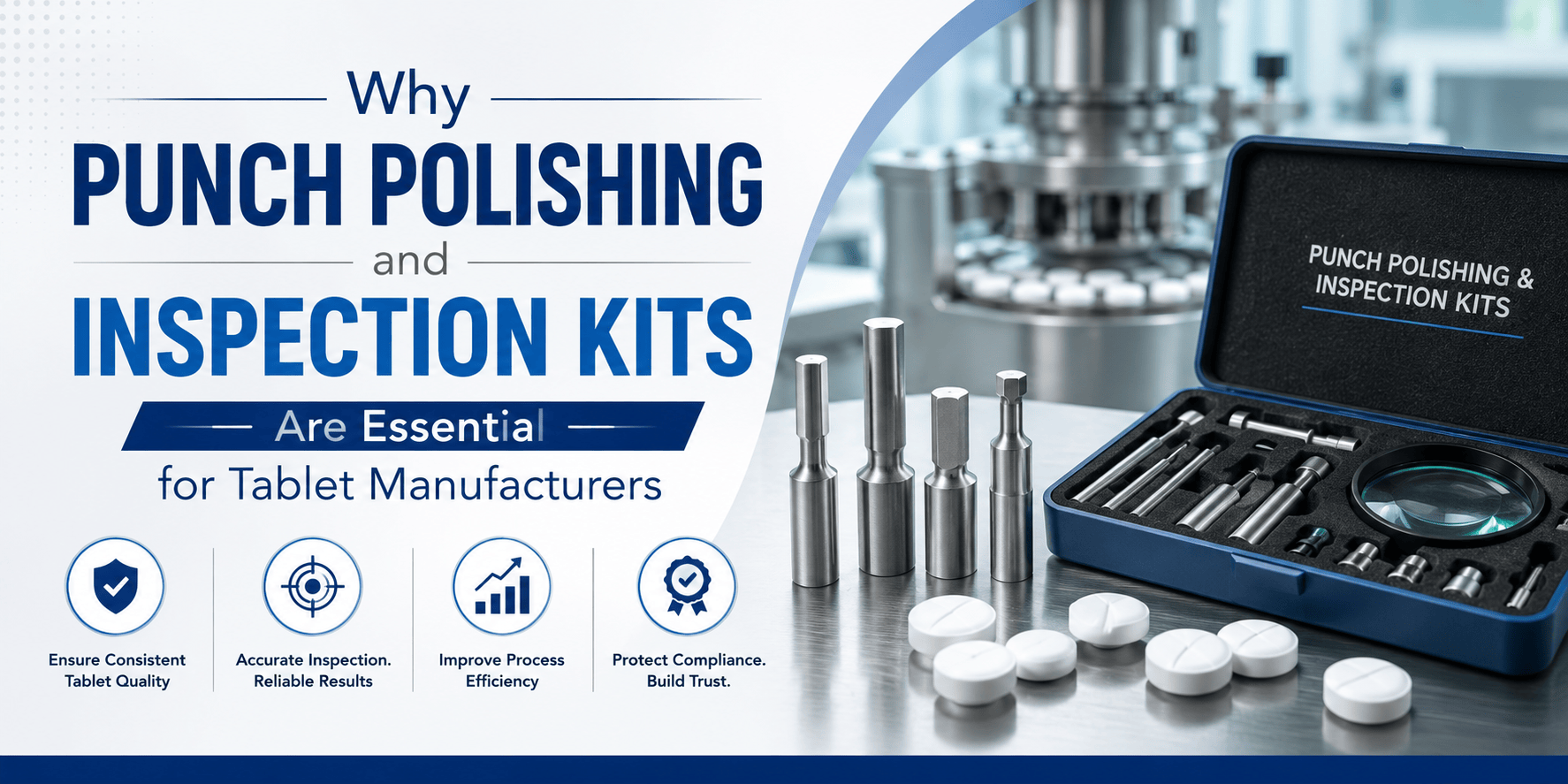
In pharmaceutical tablet manufacturing, the quality of every tablet begins with the condition of your tooling. Tablet punches and dies undergo enormous mechanical stress during compression — and over time, even the finest tooling shows wear. Punch polishing and inspection kits are two simple but powerful tools that help manufacturers stay ahead of tooling problems before they affect production.
The Hidden Cost of Neglected Tooling
Worn or damaged punch tips don't just affect tablet appearance — they create real production losses. Sticking and picking, weight variation, capping, and powder seepage are among the most common tableting defects, and most trace back to tooling that hasn't been properly maintained.
The cost of ignoring tooling maintenance goes beyond scrapped batches. It includes unplanned press downtime, increased tooling replacement frequency, and the risk of regulatory findings during audits. A proactive maintenance routine — built around a good polishing and inspection kit — is far cheaper than reactive problem-solving.
What a Punch Polishing Kit Does
A punch polishing kit restores the original surface finish of punch tips and cavities. During production, punch faces develop micro-scratches, residue buildup, and early-stage corrosion that gradually degrade tablet quality.
A standard polishing kit typically includes:
∙ Polishing pastes and abrasive compounds suited to different levels of surface wear ∙ Assorted brushes for round, oval, capsule, and embossed cavity types ∙ Polishing wheels or nylon buffs for use with motorized polishers
∙ A storage box to keep all components clean and organized
Regular, controlled polishing — performed lightly and frequently — keeps punch surfaces at a mirror finish, reducing sticking and extending tooling life. The key is avoiding over polishing, which can round tip edges, distort embossing, or push dimensions out of tolerance.
What a Punch Inspection Kit Does
While polishing restores the surface, an inspection kit verifies the dimensions. Punches that look fine visually can still have drifted beyond acceptable tolerances — and that's where problems like tablet weight variation and hardness inconsistency originate.
A punch inspection kit typically includes:
∙ Micrometers and vernier calipers to measure punch diameters and lengths ∙ Height gauges to check working length — the most critical dimension affecting tablet weight and dosage
∙ Go/No-Go gauges for quick pass/fail checks on tip diameters
∙ Magnification lenses or digital microscopes for close visual assessment of tip faces, embossing, and die bores
Inspection should happen at regular intervals — not just when problems appear. Natural wear during compaction is gradual, and catching dimensional drift early prevents costly press damage and batch failures.
Using Both Kits Together
Polishing and inspection are two sides of the same coin. The polishing kit fixes surface condition; the inspection kit confirms dimensional integrity. Using one without the other leaves a critical gap in your tooling quality program.
The recommended workflow is straightforward:
1. Clean — remove all residue before maintenance begins
2. Inspect visually — check for damage, wear, and corrosion under magnification
3. Measure — verify all critical dimensions with the inspection kit
4. Polish — recondition the surface using appropriate compounds and brushes
5. Re-measure — confirm dimensions are within tolerance after polishing
6. Document — record findings for GMP traceability
This cycle, repeated consistently, forms the backbone of a compliant and effective tooling maintenance program.
The Bottom Line
Punch polishing and inspection kits are a small investment with a significant return. They protect expensive tooling, maintain consistent tablet quality, reduce unplanned downtime, and support GMP compliance — all of which directly impact your bottom line.
If your facility doesn't yet have a structured polishing and inspection routine, now is the time to start. Train your maintenance team, standardize the process, and build it into your SOPs. The results will show in every batch you produce.
Interested in finding the right polishing and inspection kit for your tablet press tooling? Get in touch with our team for expert guidance.